
Where Is 3I/ATLAS Now? Position, Speed & What's Next
As of February 2026, interstellar comet 3I/ATLAS is receding from Earth at roughly 58 km/s, fading through magnitude 15 in the constellation Gemini. The window for amateur observation has closed. Professional telescopes like Hubble and JWST are still watching, but the comet's days as a bright target are behind it.
Ahead lies a close flyby of Jupiter in March, then a long coast through the outer solar system and into interstellar space — carrying with it the most complete chemical profile ever obtained from an object born around another star.
Current Position: Gemini, Magnitude 15
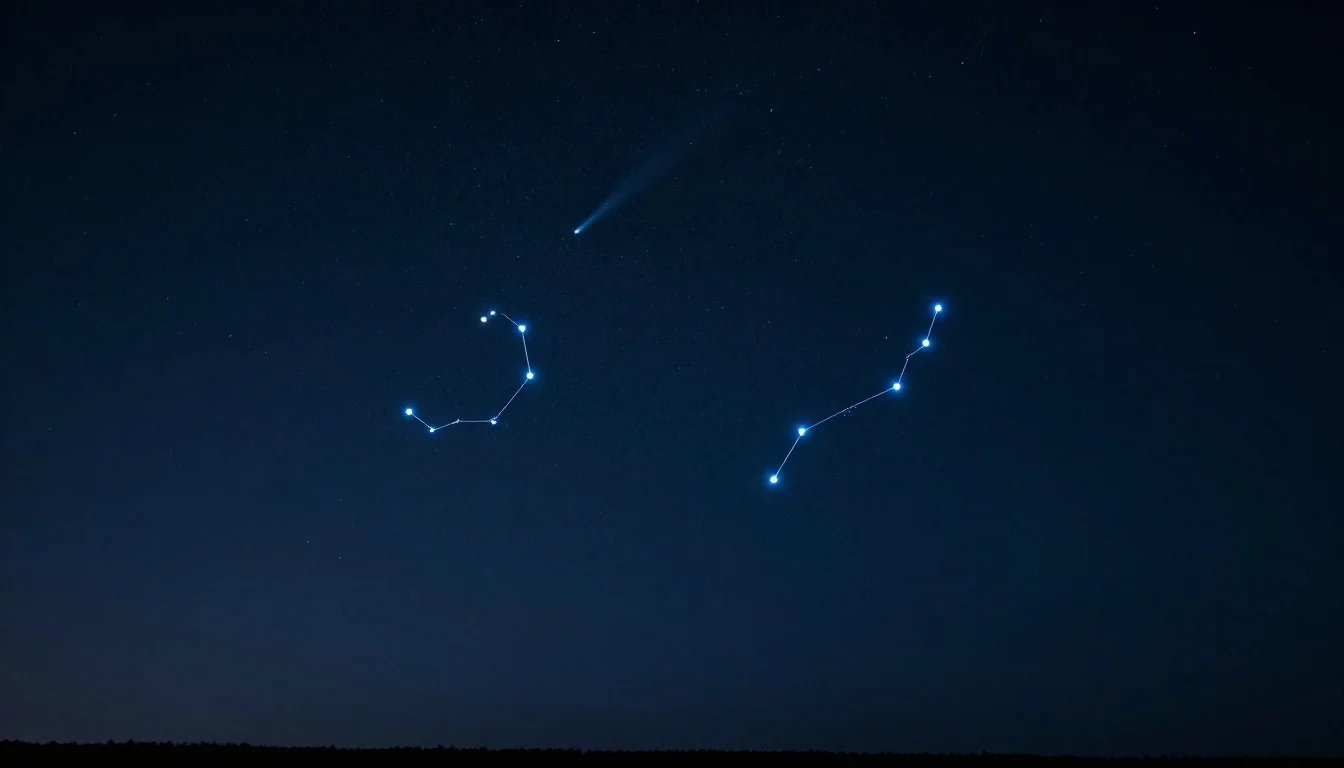
In February 2026, 3I/ATLAS sits in the constellation Gemini, having drifted westward from Cancer where it spent January. The comet is well-placed for Northern Hemisphere observers — Gemini rides high in the winter evening sky between Orion and Leo.
But "well-placed" is relative. At magnitude 15.2, 3I/ATLAS is approximately 4,000 times fainter than the dimmest star visible to the naked eye. You would need at least a 10-12 inch (250-300mm) telescope with CCD imaging and dark skies to capture it. Visual observation is essentially impossible at this brightness.
The comet currently sits approximately 3.5 AU from the Sun (between the orbits of Mars and Jupiter) and roughly 3 AU from Earth — about 450 million km. For comparison, at its closest approach to Earth on December 19, 2025, it was 1.80 AU (269 million km) away.
Ground-based telescopes can continue observing 3I/ATLAS through approximately May 2026, when it enters its second solar conjunction. After re-emerging around September 2026, it will be beyond Saturn's orbit and fainter than magnitude 20.
The Fading: From Outburst to Obscurity

3I/ATLAS's brightness journey has been full of surprises. At discovery on July 1, 2025, it was a faint magnitude 17.8 — a dot requiring professional telescopes to see. Through the summer, it brightened steadily as it approached the Sun.
The comet significantly outperformed brightness predictions around perihelion. Official models forecast a peak of about magnitude 14.7, but observers recorded it as bright as magnitude 11.5 in early November 2025 — approximately 20 times brighter than expected. Some reported it even brighter during apparent outbursts.
Since then, the fade has been relentless:
| Date | Magnitude | Status |
|---|---|---|
| July 2025 | ~17.8 | Discovery — professional telescopes only |
| November 2025 | ~11.5 | Peak brightness — large amateur scopes |
| January 2026 | ~13 | Fading — advanced amateur equipment |
| February 2026 | ~15.2 | Professional equipment only |
| June 2026 | ~20.9 (projected) | Large professional telescopes only |
The December 2025 eruption detected by SPHEREx briefly slowed the fade, but by February the comet is back on a steady downward trajectory.
Speed: The Fastest Interstellar Object Ever Detected
3I/ATLAS is moving through the solar system at extraordinary speed. Its hyperbolic excess velocity — the speed it will carry as it escapes the Sun's gravity — is 58.01 km/s (about 130,000 mph or 209,000 km/h). This makes it the fastest interstellar object ever detected:
- 3I/ATLAS: 58 km/s
- 2I/Borisov (2019): 32 km/s
- 1I/'Oumuamua (2017): 26 km/s
At perihelion on October 29, 2025, the comet reached a peak velocity of 68 km/s (42 miles per second) relative to the Sun. Even now, climbing out of the Sun's gravity well, it's still moving at roughly 60 km/s.
The comet approached from the direction of Sagittarius (near the galactic center) and is departing toward Gemini. Its galactic velocity components tell the story: it's moving away from the Galactic Center at 51 km/s and upward through the galactic plane at 18.5 km/s. Scientists believe it originated in the Milky Way's thick disk — a population of older stars — and may be anywhere from 3 to 11 billion years old.
Next Stop: Jupiter at 0.36 AU
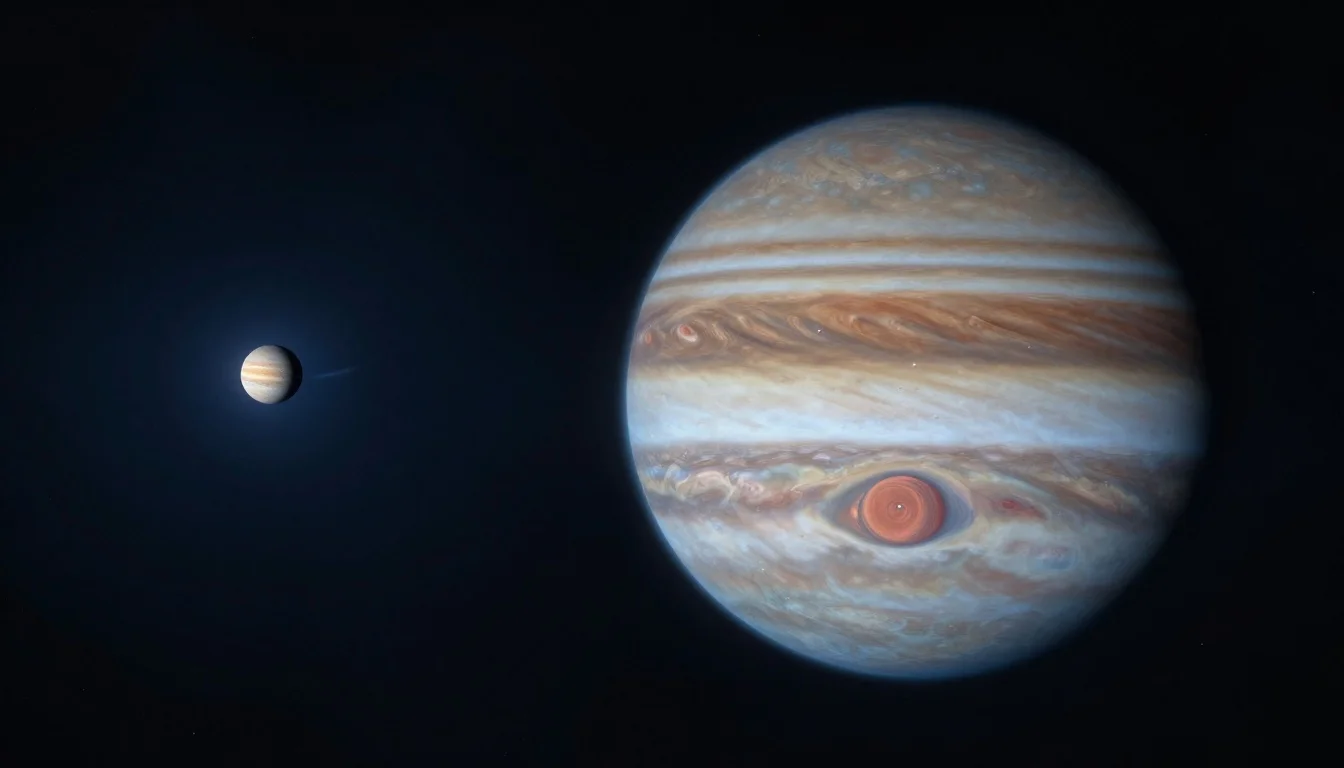
The most significant upcoming event is 3I/ATLAS's closest approach to Jupiter on March 16-17, 2026, at a distance of just 0.358 AU (53.6 million km). This is approximately equal to Jupiter's Hill radius — the boundary where the giant planet's gravity dominates over the Sun's.
What to expect:
The comet will not be captured or destroyed. Its velocity is far too high for Jupiter's gravity to trap it. The flyby will, however, deflect its trajectory — redirecting it more firmly toward the constellation Gemini as it departs the solar system.
Juno won't intercept it. A theoretical proposal suggested NASA's Juno spacecraft, currently orbiting Jupiter, could redirect to observe 3I/ATLAS during the flyby. But Juno is low on fuel and has engine limitations, making such a maneuver impractical.
One curious detail: On March 17, one day after closest Jupiter approach, 3I/ATLAS will also pass close to Eupheme, one of Jupiter's small irregular moons.
After the Jupiter flyby, the comet's remaining milestones are crossings of the outer planets' orbits — each marking another step on the long road to interstellar space.
Still Erupting: The SPHEREx Surprise

One of the most remarkable recent findings is that 3I/ATLAS was still violently active in December 2025 — two full months after perihelion.
NASA's SPHEREx infrared space telescope observed the comet in December and found it "full-on erupting into space." The infrared data showed a sharp brightness increase and newly exposed pristine subsurface ices releasing water vapor, carbon dioxide, carbon monoxide, methanol, cyanide, methane, and even rocky material.
This delayed eruption is explained by thermal inertia: the Sun's heat takes time to penetrate through the outer layers of a comet's nucleus. The surface ices sublimate first during perihelion, but deeper volatile-rich layers don't begin outgassing until weeks or months later. For 3I/ATLAS, this meant its most intense activity came well after its closest approach to the Sun.
SOHO/SWAN data quantified the asymmetry precisely: water production rose as the inverse 5.9 power of distance on approach but declined as only the inverse 3.3 power after perihelion — meaning the comet stayed active much longer than the symmetric model would predict. Peak water production reached approximately 3.17 × 10²⁹ molecules per second on November 6, 2025.
By February 2026, at 3.5+ AU from the Sun, water-ice sublimation has largely ceased. But CO₂ and CO — which sublimate at much lower temperatures — may still be driving residual outgassing, keeping the comet weakly active even at this distance.
The Spinning Top: From 16 Hours to 7

Before perihelion, 3I/ATLAS rotated with a leisurely period of 16.16 hours, measured by multiple ground-based telescopes during July 2025. After perihelion, Hubble and ground-based photometry revealed the nucleus had spun up to approximately 7.1 hours — more than doubling its rotation rate.
This dramatic spin-up is caused by outgassing torques. As jets of gas and dust erupt asymmetrically from the nucleus surface, they act like tiny rocket thrusters, applying torque that either speeds up or slows down the rotation. For 3I/ATLAS, perihelion's intense activity overwhelmingly accelerated the spin.
The post-perihelion jet structure visible in Hubble images directly reflects this rapid rotation: three symmetric mini-jets separated by 120 degrees wobble back and forth by +/-20 degrees with a period matching the 7.1-hour spin. The rotation axis is nearly aligned with the Sun-comet direction (within ~20 degrees), so the jets sweep out a cone-like pattern as the nucleus turns.
Interestingly, some analysis suggests the comet may now be slowing down again as it recedes from the Sun and outgassing torques diminish. Whether the spin rate continues to evolve will be tracked by any remaining Hubble observations.
The Other Interstellar Visitors: Where Are They?
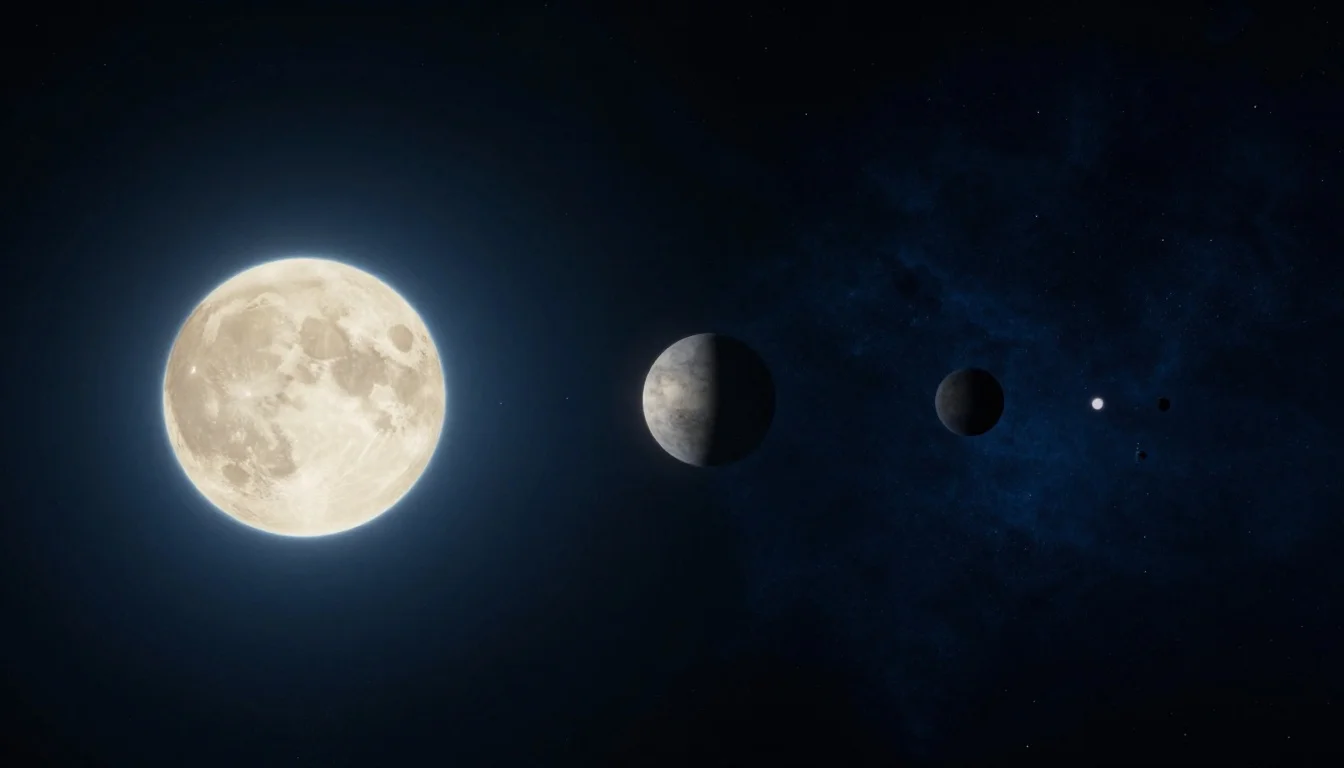
Only three interstellar objects have ever been confirmed. Here's where all three are in February 2026:
1I/'Oumuamua — Discovered October 2017, this enigmatic object (with no detected coma or tail) is now approximately 48 AU from the Sun — beyond Neptune's orbit, heading toward the constellation Pegasus at 26 km/s. It was last observed in January 2018 and is far too faint for any existing telescope to detect. Its true nature — asteroid, comet, or something else — remains debated.
2I/Borisov — Discovered August 2019, this clearly cometary interstellar visitor reached perihelion in December 2019. Its nucleus fragmented in March-April 2020 and it was last observed by Hubble shortly after. Now approximately 20-25 AU from the Sun, heading toward the constellation Telescopium at 32 km/s, and also far beyond detection.
3I/ATLAS — The largest (2.6 km nucleus diameter, ~40 times more massive than 2I/Borisov and 20,000+ times more massive than 'Oumuamua), the fastest (58 km/s), and by far the most scientifically productive of the three. It remains the only interstellar object still actively being observed.
Avi Loeb has estimated there may be approximately 10 trillion objects like 3I/ATLAS passing through the solar system at any given time — most too small and dark to detect with current surveys.
The Long Road Ahead
After the Jupiter flyby in March, 3I/ATLAS faces a long and lonely journey:
| Milestone | Approximate Date | Distance from Sun |
|---|---|---|
| Jupiter flyby | March 16, 2026 | 5.2 AU |
| Cross Jupiter's orbit outbound | March 20, 2026 | 5.2 AU |
| Cross Saturn's orbit | ~July 2026 | 9.5 AU |
| Cross Uranus's orbit | ~April 2027 | 19.2 AU |
| Cross Neptune's orbit | ~March 2028 | 30 AU |
| Reach inner Oort Cloud | ~2189 | 2,000 AU |
| Reach outer Oort Cloud | ~10,000 CE | 100,000 AU |
At 58 km/s, 3I/ATLAS will reach the distance of Alpha Centauri (4.37 light-years) in approximately 22,500 years — though it's not heading in that direction. It will continue into the galaxy, carrying the chemical fingerprints of its birthplace: CO₂-dominated ices, methane, methanol, hydrogen cyanide, and the first detected nickel emission from an interstellar comet.
The comet arrived from the direction of Sagittarius, likely from the Milky Way's thick disk — a population of stars 3-11 billion years old. The material in its nucleus predates our solar system. After a brief visit lasting just a few months in our instruments' view, it departs toward Gemini, never to return.
Hubble and JWST are expected to continue monitoring 3I/ATLAS for several more months as it fades. Each observation adds another data point to the most complete portrait ever assembled of an object from another star system. But the clock is ticking — by late 2026, even the most powerful telescopes will struggle to keep it in view.
Track 3I/ATLAS's exact position right now on our Orbit page, check if it's visible tonight on the Observing page, and explore the full timeline of discoveries.